New Horizons
 Project Management Academy
 Six Sigma Online
 TCM Security
 TRACOM
 Velopi
 Watermark Learning
 Login
Login


Key Takeaways
- Simultaneous Pressures: Teams thrive when tech, process, and leadership grow together.
- Fragmentation Risk: Single pillar training creates gaps that slow everyone down.
- AI Confidence: Teams use AI well when they feel calm and capable with it.
- Operational Clarity: Strong processes help teams stay aligned as work speeds up.
- Leadership Strength: Mature leaders keep teams steady during rapid change.
Organizations Need Tech, Process, and Leadership Readiness All at Once
Modern teams face several pressures at once. New AI tools are appearing quickly, workflows are more intertwined, and people leadership carries greater weight. Together, these pressures increase the pace of the day and compete for attention.
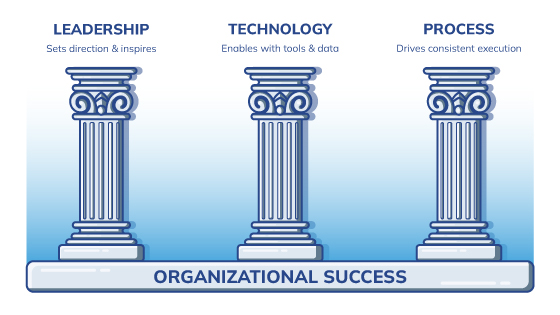
Focusing on one area at a time leaves teams off balance. Technology can’t support teams well without clear processes, and even strong processes become difficult to follow when leadership doesn’t provide clarity. Because these pillars shape one another, progress becomes steadier when they grow together.
At XentinelWave, teams received new AI tools before workflows were ready, and managers were still finding their footing. People were working hard, yet something stayed slightly out of sync, and a few team members paused in a planning conversation when they noticed the steps weren’t aligning as expected.
This is why the Triple Threat skill set matters. It brings technology readiness, process discipline, and leadership maturity together in a way that helps teams regain steady footing. In 2026, organizations succeed not by doing more, but by aligning more, and teams feel the difference when these strengths grow together.
Why Single Pillar Training Fails
Teams often learn new skills in one area at a time, but daily work rarely separates things so neatly. Technology, processes, and leadership interact constantly, and uneven growth leaves teams slightly out of rhythm. Tasks take longer than they should, minor frustrations build, and it becomes clear that the challenge is alignment, not effort.
As the leadership team settled into their planning discussion, the COO reflected on their recent training efforts. “We trained in the right topics,” she said, “but each one happened in its own bubble. Our teams were left to connect the pieces on their own.” Several leaders nodded because the gaps had been slowing their projects for weeks.
The limits of single pillar training show up quickly:
- Technology-Only Focus: Teams gain tools but struggle with workflow integration or ethical decision-making.
- Process-Only Focus: Teams understand the rules but can’t move quickly without the right tools or adaptability.
- Leadership Only Focus: Managers support people well but feel unsure about guiding teams through complex systems.
- Simultaneous Growth Needed: Teams must develop all three areas together to maintain alignment.
- Uneven Maturity: When one pillar advances faster than others, friction grows and performance slows.
When teams grow unevenly across technology, process, and leadership, the strain appears quickly. Tasks take longer, people compensate for gaps, and progress slows. Seeing the shared root of these issues gives teams the clarity to rebuild in a steadier, more connected way and to recognize the skills that matter most for a Triple Threat team.
The Skills That Turn Good Teams Into Triple Threat Teams
When teams grow together in technology, processes, and leadership, their daily work begins to change. Conversations become clearer, coordination improves, and confidence builds across the group. These competencies are not separate skills but connected strengths that help teams stay steady as their work evolves. This is the essence of a Triple Threat team.

AI Literacy
AI literacy helps teams feel calm and capable as new tools appear. It begins with a basic understanding of how AI works, what it can and can’t do, and which risks deserve attention. This grounding helps teams use AI with confidence.
Strong AI literacy also includes the ability to use AI for creation, analysis, prediction, and decision support. Teams often practice this by using AI to review drafts together before finalizing their work. Confidence ends up mattering more than access, since teams use AI best when they feel comfortable with it.
As the group explored how technology readiness fit into the challenge, the CIO offered her perspective. “We gave everyone the tools,” she said, “but we learned quickly that comfort takes time. Training has to build confidence, not just awareness.” Her comment prompted several team leads to share that they had been unsure about how freely they were allowed to use the tools.
Key elements of AI literacy include:
- Tool Understanding: Knowing how AI functions, where limits exist, and what risks matter.
- Practical Usage: Applying AI for creation, analysis, prediction, and decision support.
- Confidence Building: Helping teams feel steady using AI in daily work.
Process Discipline
Process discipline provides teams with stability when work becomes fast-paced and interconnected. Clear processes help people understand how their tasks connect and where responsibilities shift. This structure supports predictable, reliable work.
Operational readiness focuses on giving teams clarity at every step of their work. It helps people see how tasks connect, where responsibilities shift, and how decisions move through the organization. For example, teams might document who reviews materials before they move to another department.
Key elements of process discipline include:
- Clarity and Consistency: Creating processes teams can trust every day.
- Workflow Skills: Mapping, sequencing, and clarifying handoffs.
- Governance Alignment: Keeping decisions and structures connected.
Leadership Maturity
Leadership maturity shapes how teams experience change. It includes influence, communication, coaching, emotional availability, and decision framing. Mature leaders create an environment where teams feel steady and supported.
These leaders also protect psychological safety, which helps team members ask questions, surface concerns, and speak openly. Team members often see this when leaders take an extra moment to clarify expectations during complex work.
When the conversation shifted toward people leadership, the HR director added a thoughtful insight. “Our managers care deeply,” she said, “but the conversations are becoming harder than the systems themselves.” A few leaders exchanged knowing glances, recognizing the same challenge in their recent team discussions.
Key elements of leadership maturity include:
- Clear Communication: Helping teams understand expectations and direction.
- Supportive Coaching: Guiding people through uncertainty with calm presence.
- Psychological Safety: Encouraging open conversation without fear.
Integration of All Three Pillars
True strength emerges when technology readiness, process discipline, and leadership maturity grow together. When training happens as a unified effort, teams adopt change more smoothly and sustain performance over extended periods.
Integrated capability builds shared confidence among teams. Work feels clearer, communication feels easier, and decisions feel more grounded. Teams often notice this when decisions made in leadership meetings align naturally with changes in their workflows.
Key elements of integrated capability include:
- Unified Growth: Developing tech, process, and leadership skills together.
- Reduced Rework: Preventing gaps that slow team performance.
- Sustained Performance: Supporting consistent progress across the team.
Each competency strengthens the others, and teams begin to feel the difference as these skills rise together. It becomes easier to communicate, make decisions, and stay aligned when work shifts. With this foundation in place, teams can finally build the kind of shared readiness that makes day-to-day collaboration smoother and easier to navigate.
A Practical Framework for Training Triple Threat Teams
Training lands best when it matches how teams really work. People learn more clearly together, and new skills take hold more easily when applied in familiar situations. Teams also adapt more smoothly when learning builds in steady steps. A good framework blends these pieces so teams grow confident without feeling pushed.
Integrated Programs
Integrated programs bring AI literacy, workflow excellence, and leadership behaviors into one shared experience. This combined approach helps teams see how their decisions, tools, and processes interact.
As the group discussed unified training, XentinelWave’s learning lead shared a key insight. “Our content is strong,” she said, “but once we train teams together, everything will make more sense. People will finally see the whole picture.” A few team leads realized for the first time how closely their work relied on other groups.
Key elements of integrated programs include:
- Connected Content: Teaching tech, process, and leadership as linked skills.
- Shared Learning: Helping teams build common understanding.
Sequenced Learning Waves
Sequenced learning waves help teams develop skills in a step-by-step manner. Foundations come first, followed by more advanced layers once the basics feel comfortable. This approach prevents overload and supports steady learning.
Teams appreciate this pacing because it matches how they naturally adapt to change. A team might begin by clarifying basic workflows before introducing tools that automate parts of the process.
Key elements of sequenced learning include:
- Foundation First: Establishing shared starting points.
- Growth Over Time: Moving to advanced skills once teams are ready.
Scenario-Based Learning
Scenario-based learning brings real situations into the classroom. These scenarios show how technology, process, and leadership intersect, helping teams practice decisions that involve all three pillars.
Teams often find it helpful when scenarios reflect situations they recognize from their own projects.
Key elements of scenario learning include:
- Real Examples: Reflecting the complexity teams face every day.
- Cross Pillar Insight: Showing how decisions affect all areas of work.
Team-Based Adoption Models
Team-based models help intact groups grow together. These models strengthen communication, build shared expectations, and help teams align their workflows as they learn.
A simple example is guiding a project team through clarifying how they’ll share updates during a complex initiative.
Key elements of team-based adoption include:
- Shared Experience: Learning as a unit rather than as individuals.
- Aligned Behavior: Developing common expectations and language.
Measurement and Capability Mapping
Measurement helps teams understand their strengths and identify growth opportunities. Capability mapping also gives leaders a clearer picture of how the team is maturing across technology, process, and leadership.
As the group considered a more unified approach, the operations director reflected on their capability assessments. “Seeing where we stand changes everything,” he said. “It shows us where to invest and where we are already strong.” His point helped the group see how clearer readiness insights could guide more coordinated decisions.
Key elements of capability measurement include:
- Visible Progress: Showing growth across tech, process, and leadership.
- Clear Direction: Helping teams focus on the right next steps.
As teams move through these stages together, they develop a rhythm that shows up in daily work. Conversations become clearer, decisions feel more coordinated, and the next steps become easier to see. A thoughtful framework helps teams grow with confidence instead of feeling overwhelmed.
Alignment Is the Advantage
The Triple Threat skill set reflects how teams work today. Technology readiness, process discipline, and leadership maturity must grow together for progress to feel steady. When these pillars align, teams gain clarity, confidence, and the ability to perform consistently even as work speeds up.
Organizations that invest in unified capability see stronger adoption, smoother collaboration, and better outcomes. Teams feel more anchored because tools, workflows, and leadership support fit together naturally.
Six to twelve months after adopting this approach, XentinelWave began to see improvement. Adoption increased, rework declined, and teams felt more supported by their leaders. The organization became more coordinated and capable, and the progress felt both encouraging and well-earned.
Educate 360 helps teams build this kind of shared capability. Our integrated programs develop people readiness, process clarity, and technology confidence at the same time. The result is a team that feels grounded and capable, giving your organization a clear advantage as work continues to evolve.